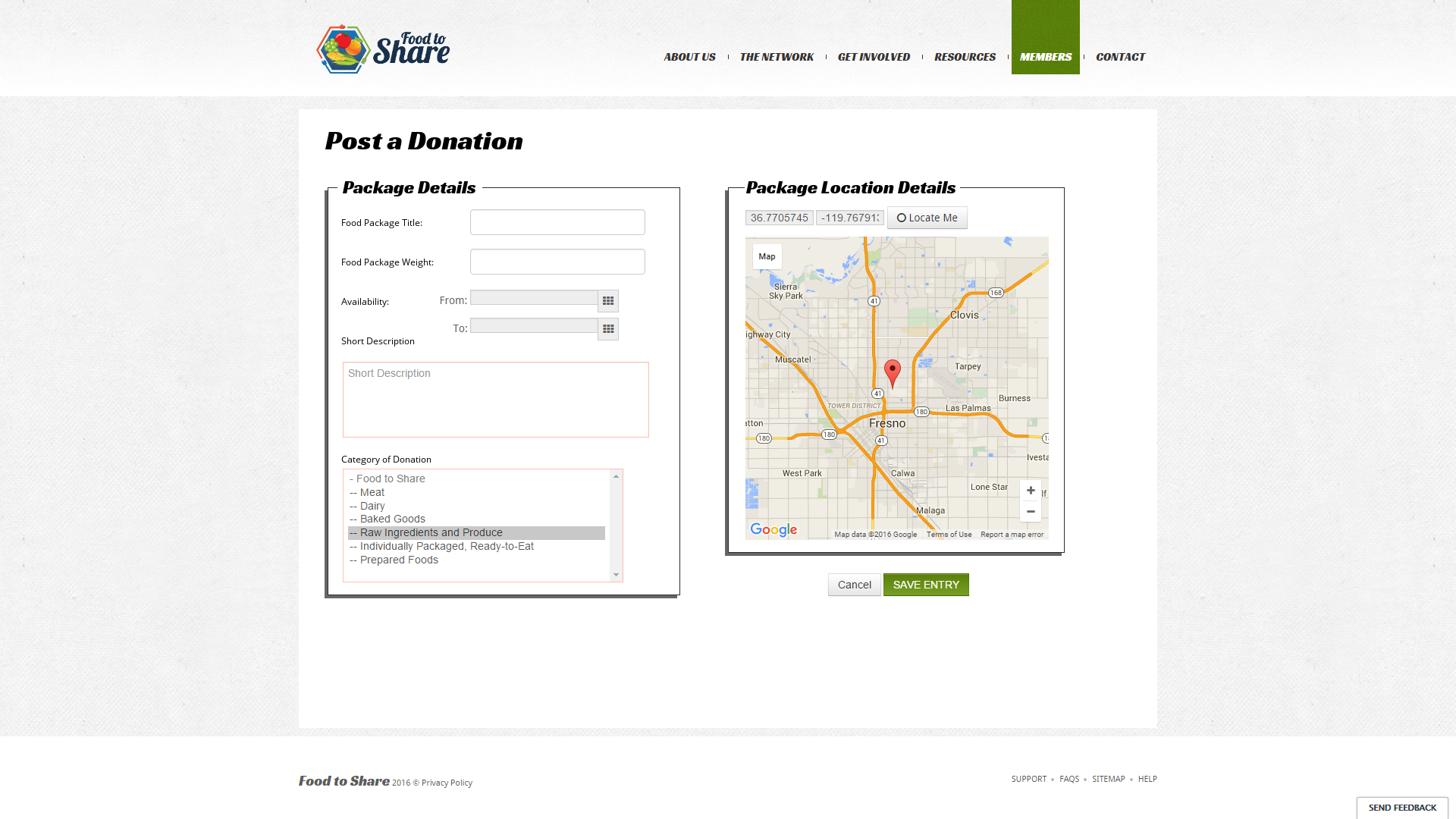
Food to Share set out to reduce food waste, combat hunger, and support environmental sustainability in California’s Central Valley. Anchored Web Solutions helped bring this mission online with a fully custom platform that let community partners post food donations and allowed recipients to claim and verify them via a unique code system—even through basic text messaging.
From design to deployment, Anchored Web built the platform in step with the organization’s evolving needs. What began as a simple listing tool grew into a full-featured system for gleaning coordination, food tracking, and real-time verification, serving churches, kitchens, and nonprofits across Fresno County.
Coordinating Donations Across a Diverse, Low-Tech Community
The project had to serve a wide range of users—from grocery store donors to distribution centers and volunteers—many without reliable tech access. The platform needed to be lightweight, intuitive, and flexible enough to support real-world food redistribution logistics with minimal training or hardware.
UX/UI Design
Created a clean, easy-to-follow interface for donors, transporters, and recipients to navigate with minimal effort.
Anchored Web delivered a streamlined platform that lets donors list items and recipients claim them using PIN verification.
Claims and donations work with SMS, no app or login required
PIN-based verification + digital signature ensures traceable, secure handoffs
Donations can be scheduled, edited, or marked as claimed in real time
Food recipient dashboards help track claims and update contact info
Fully web-based—no scanners, apps, or installs required
The Impact
A Smarter Way to Feed the Valley
Food to Share now operates with a digital system that makes food recovery faster, more transparent, and more inclusive. Whether it’s a truckload of groceries or a box of gleaned oranges, the platform enables trusted transactions and verifiable records for both tax and safety purposes.
Thanks to its SMS features and low barrier to entry, the platform made it possible for small churches, remote pantries, and informal gleaners to participate alongside large institutions. It’s a powerful example of how smart web tools can support real-world food equity.